Report on safety exercise with RNLI St Davids All weather lifeboat, Saturday 11th May 2024
Objectives:
- Consider options for undertaking CPR/medical care within a Celtic Long Boat (CLB)
- Assess process for recovery of casualty from CLB to Lifeboat
- Assess towing of CLB by All Weather Lifeboat (ALB), and inshore lifeboat (ILB)
What we did:
Weather: Wind SE 3-4
Sea: Sea choppy outside of Black Rock, Calm within the harbour.
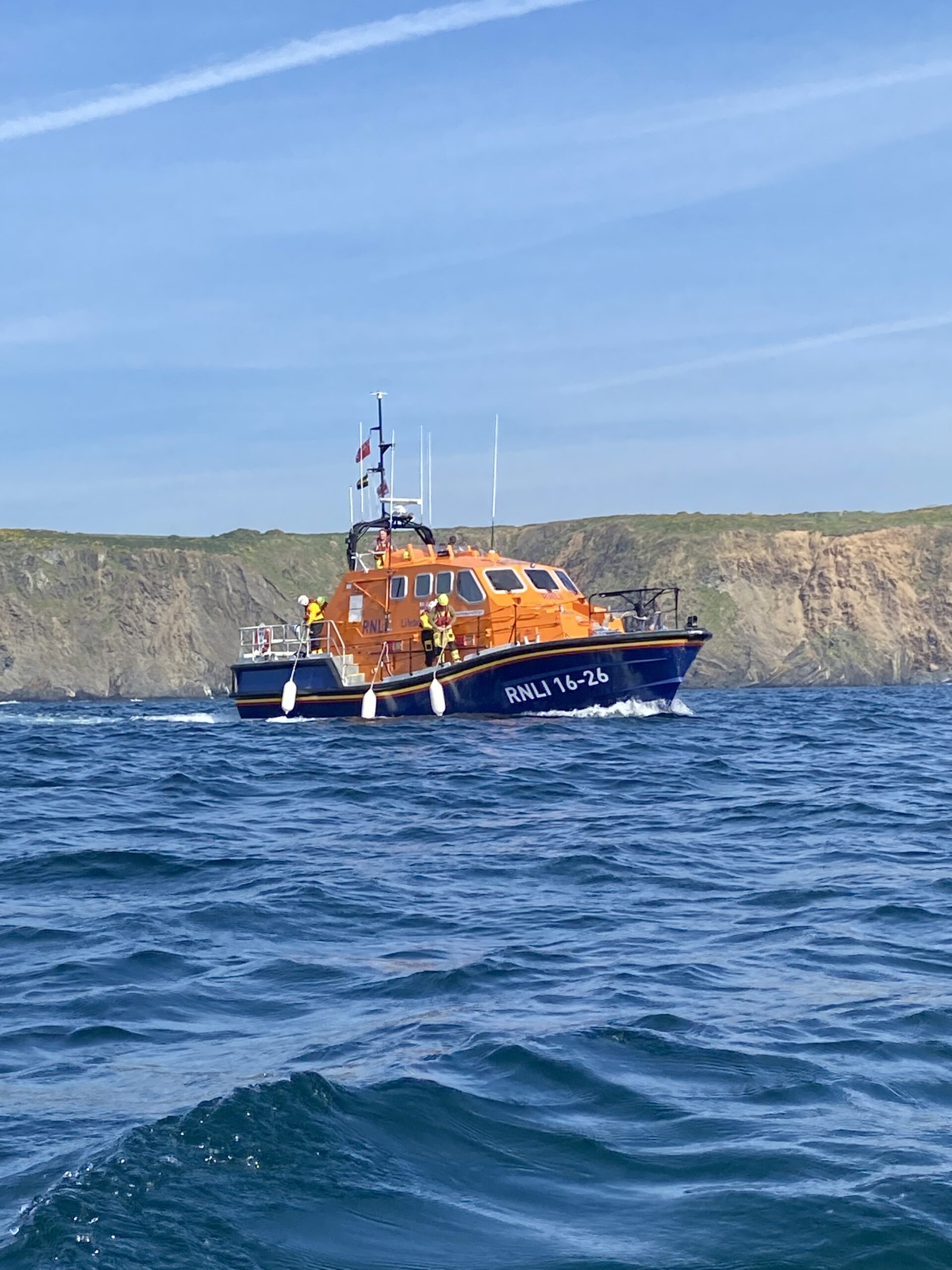
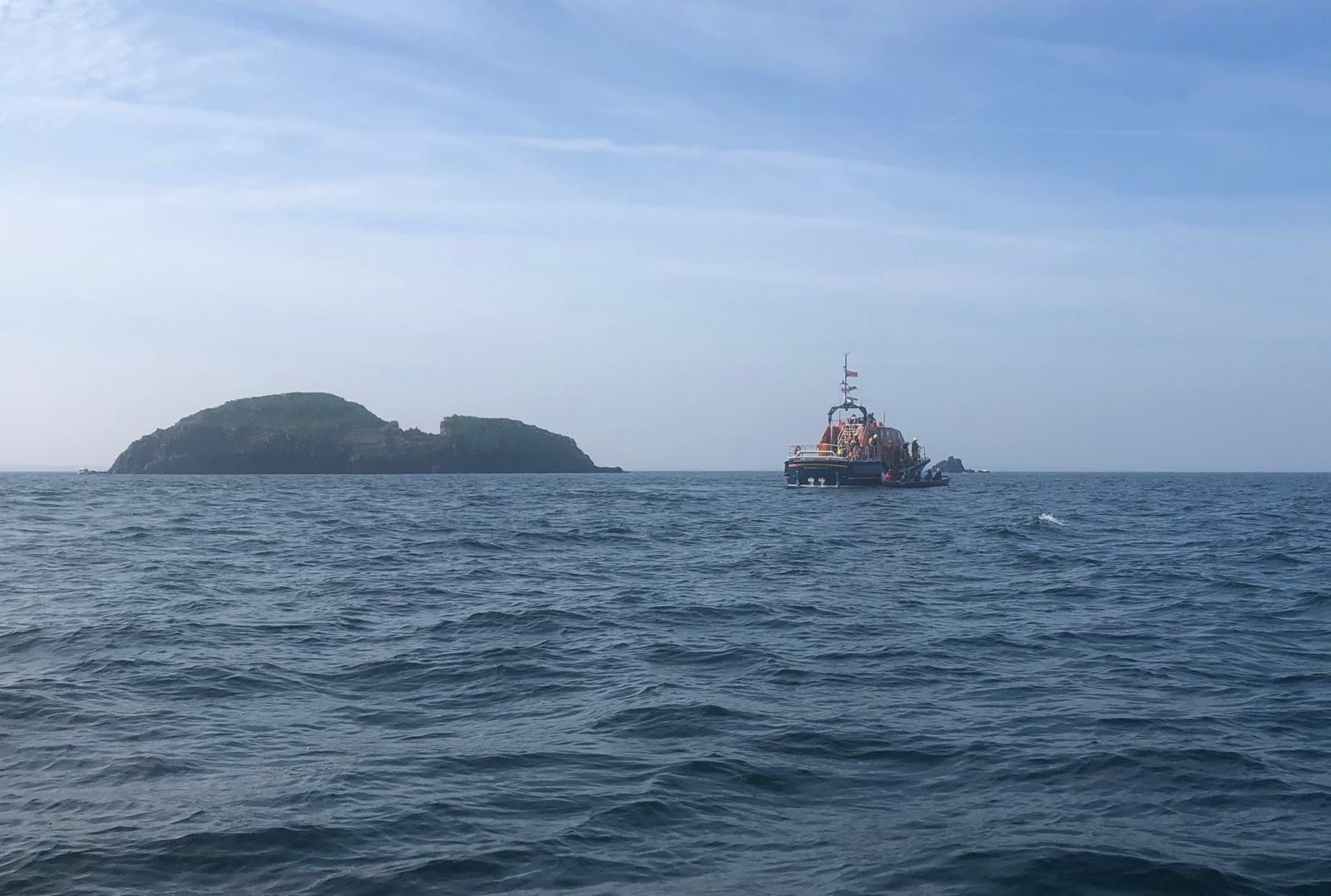
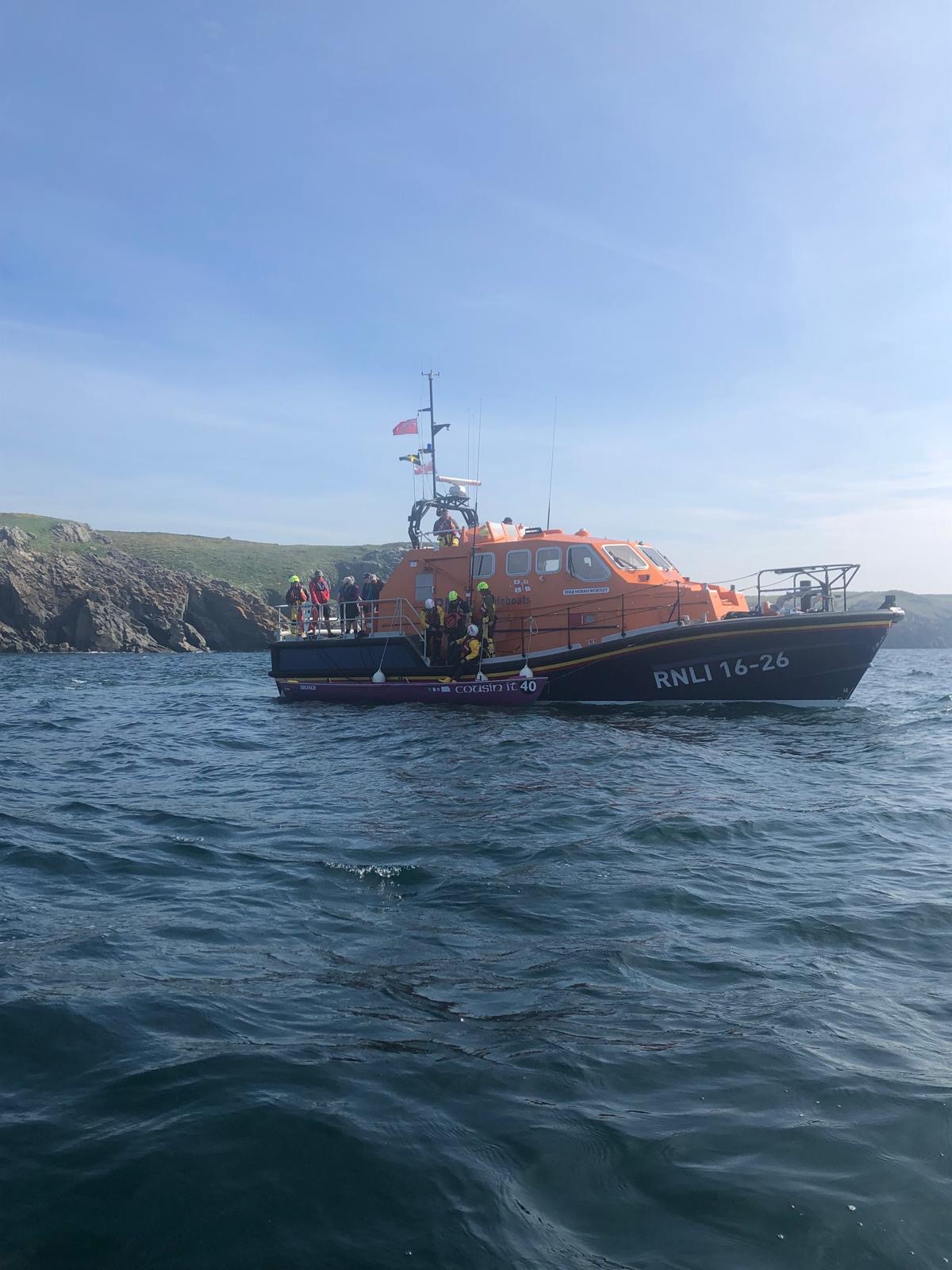
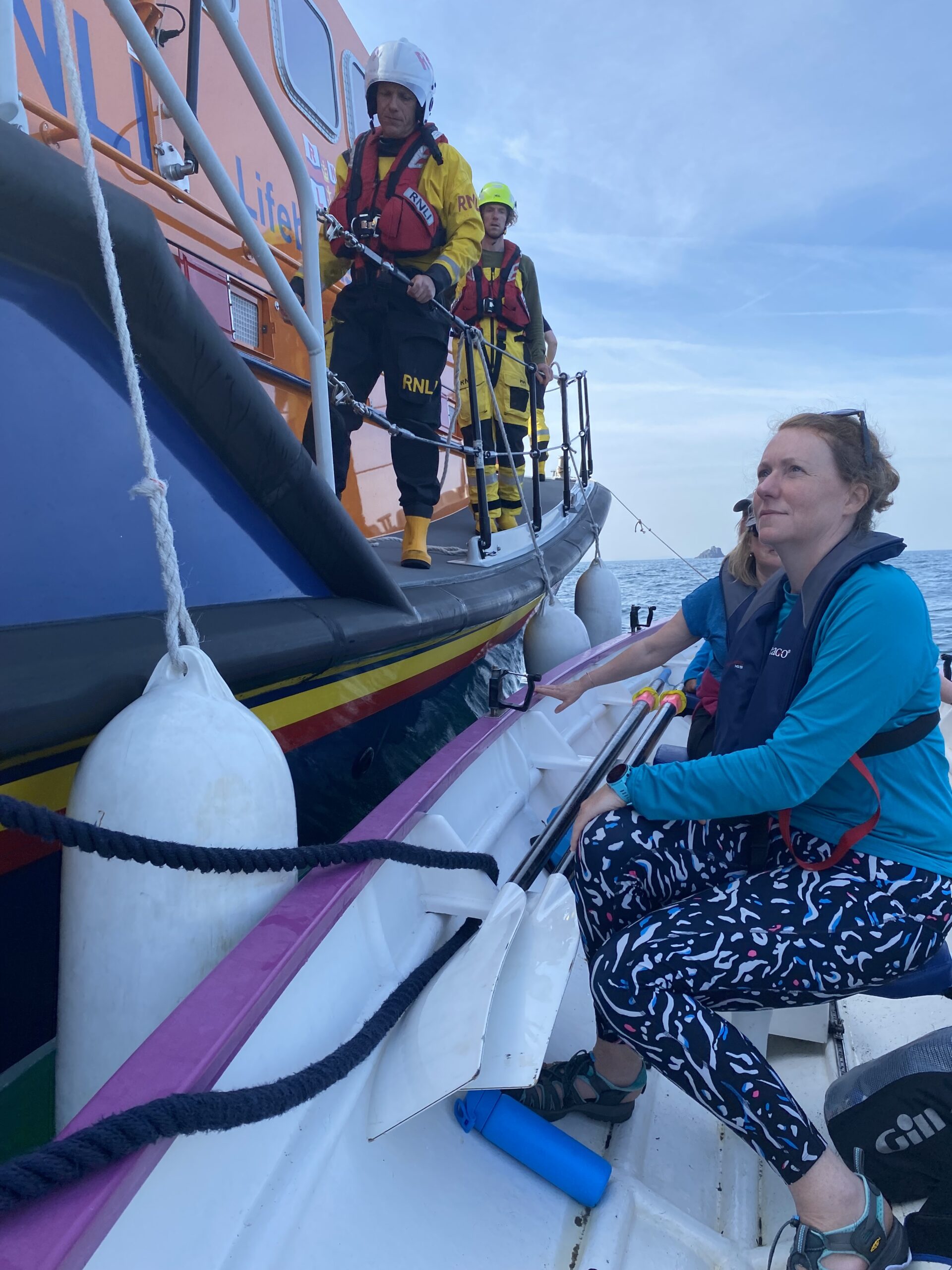
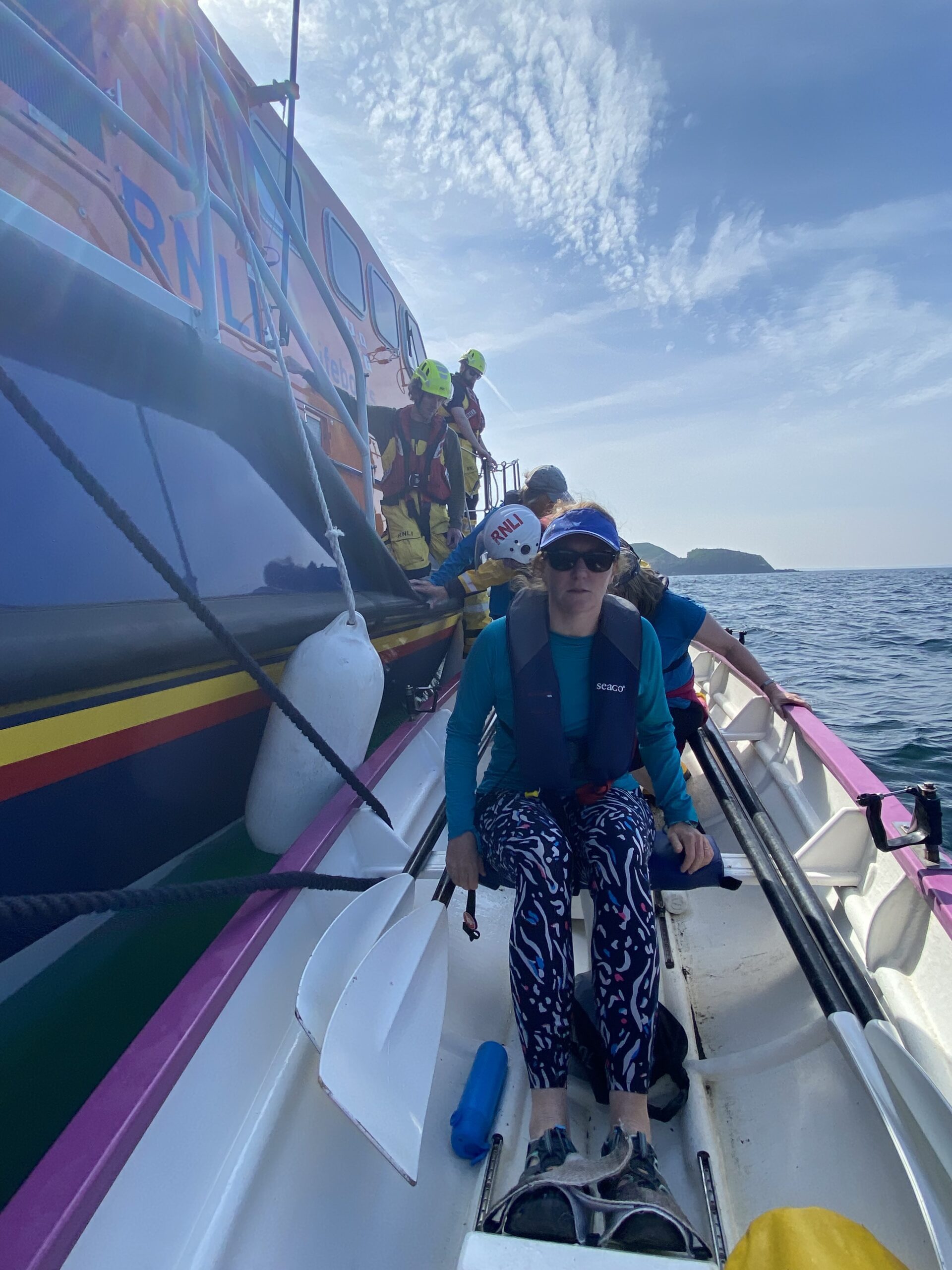
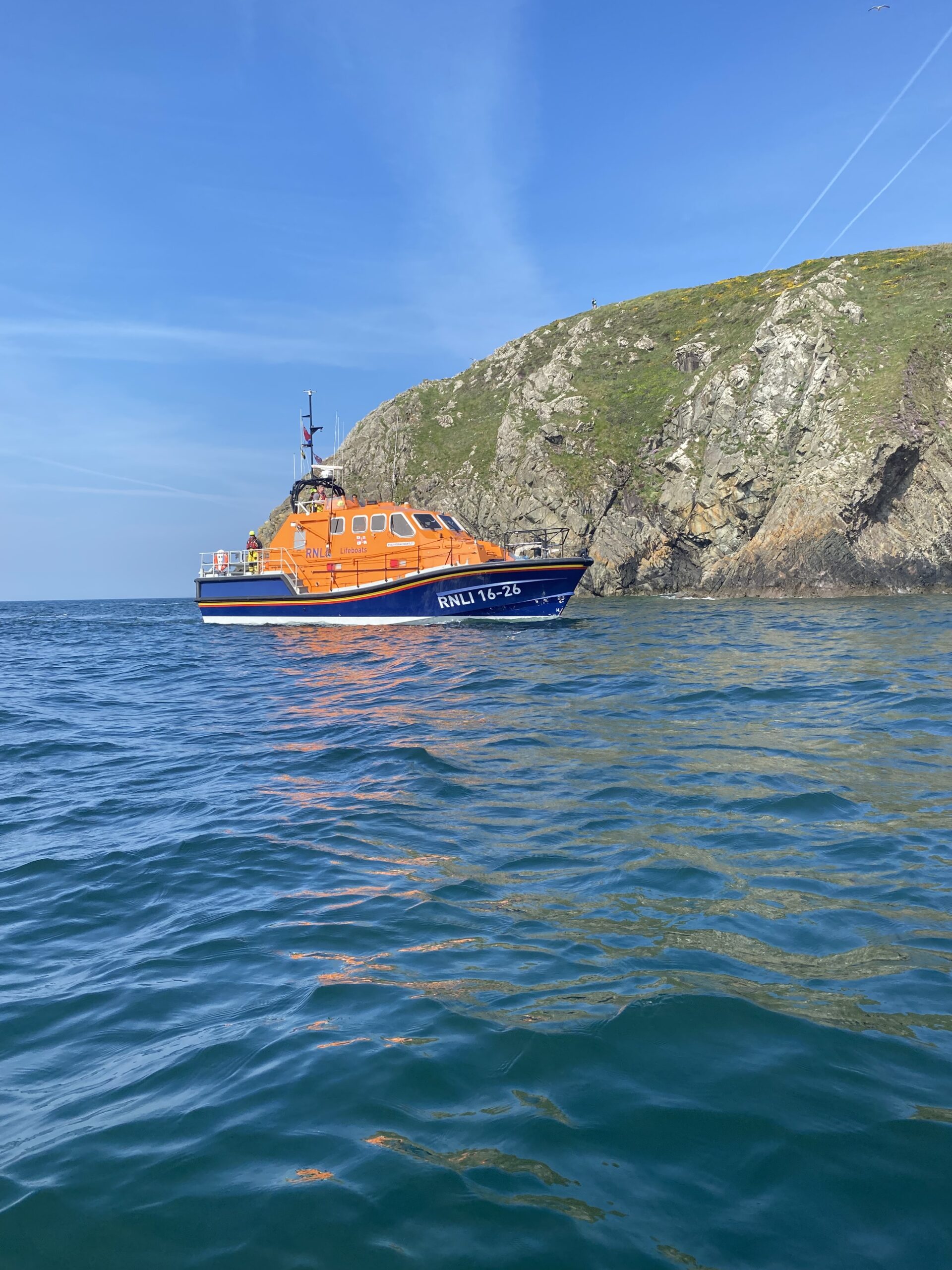
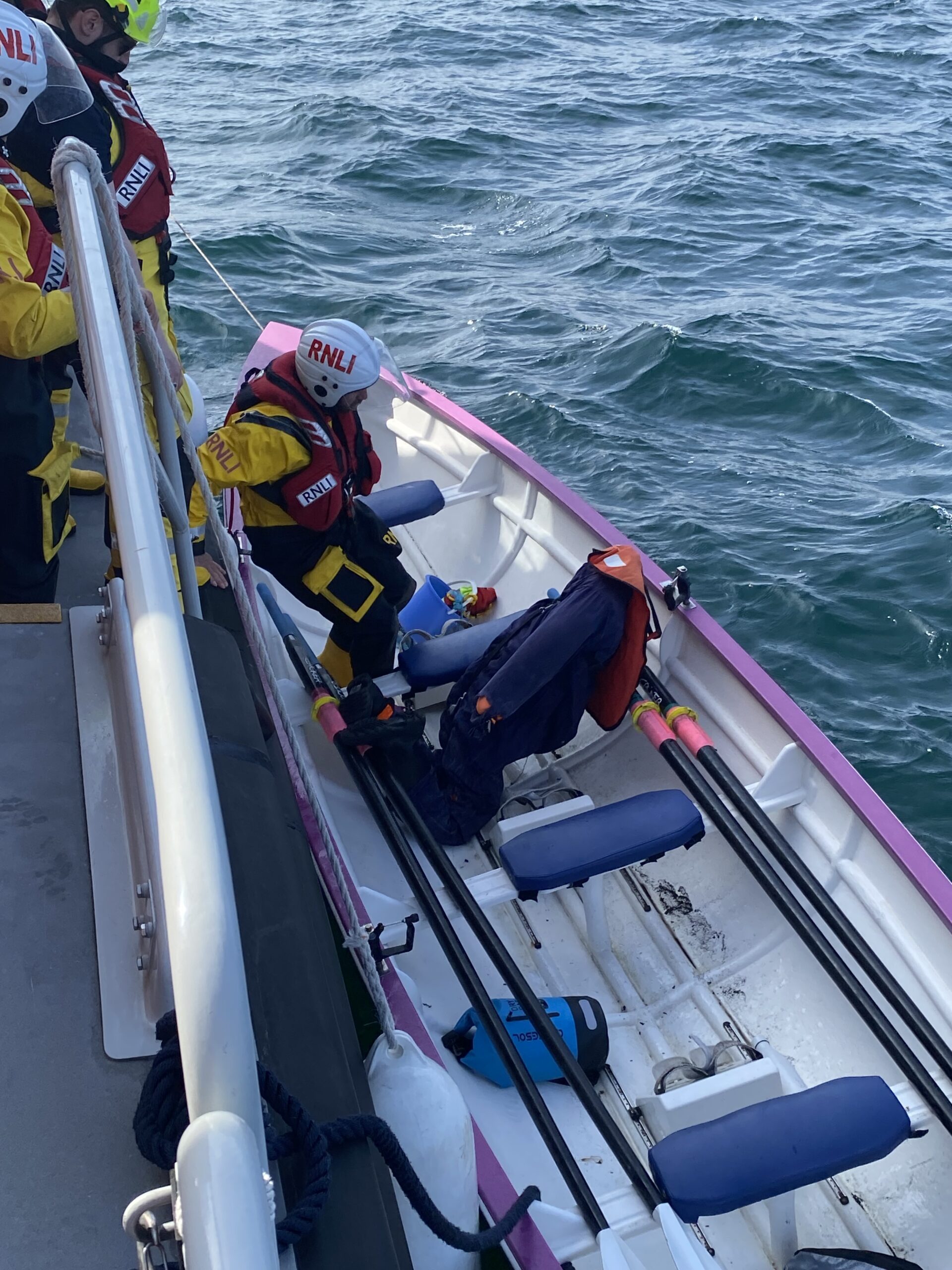
ALB came alongside and rafted up. Attached with painter at bow and ALB line around seat 4 and tied off on ALB. Crew helped off – was unstable and difficult to get off.
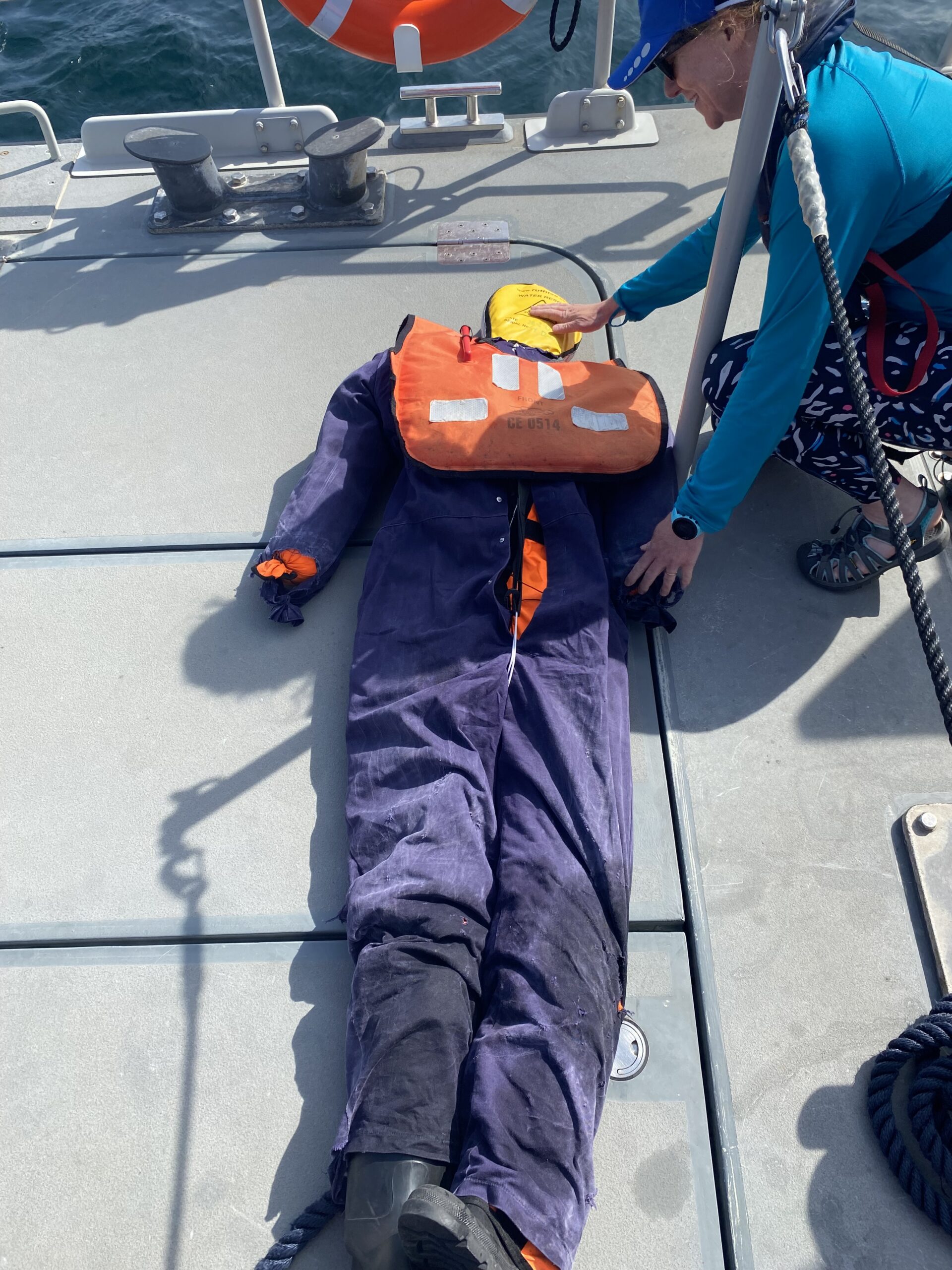
‘Dead Fred’ (the training dummy) was used to practice the extraction of a casualty from the CLB. This was difficult via manual extraction with RNLI crew doing the lifting.
Extraction with a full-weight person using the lifting crane on the ALB was then done, which was easy, controlled, and generally much better. Noted by RNLI that this would be their preferred method in similar circumstances.
RNLI noted that they would not attempt to continue medical care of casualty in CLB once on scene. They would extract and seek definitive medical care ASAP; this might be on the ALB pending airlift, or via conveyance straight ashore. This may mean that CLB crew need to maintain control of boat / row back until they can be returned to by the RNLI. If not possible, they may get onto lifeboat (one with casualty or another lifeboat) meaning CLB is left until can be retrieved.
The exact course of action would depend on the situation, combined with factors such as tide state within Solva, condition of remaining CLB crew, availability of ongoing medical care, and which lifeboat was tasked – it might be an ILB or the ALB.
CLB was conveyed in the alongside position. Much dipping of boat when not in lee of wind, gunwhales nearly went under. Better when in lee of ALB. Over a long distance, resorting to a regular tow astern would probably be better.
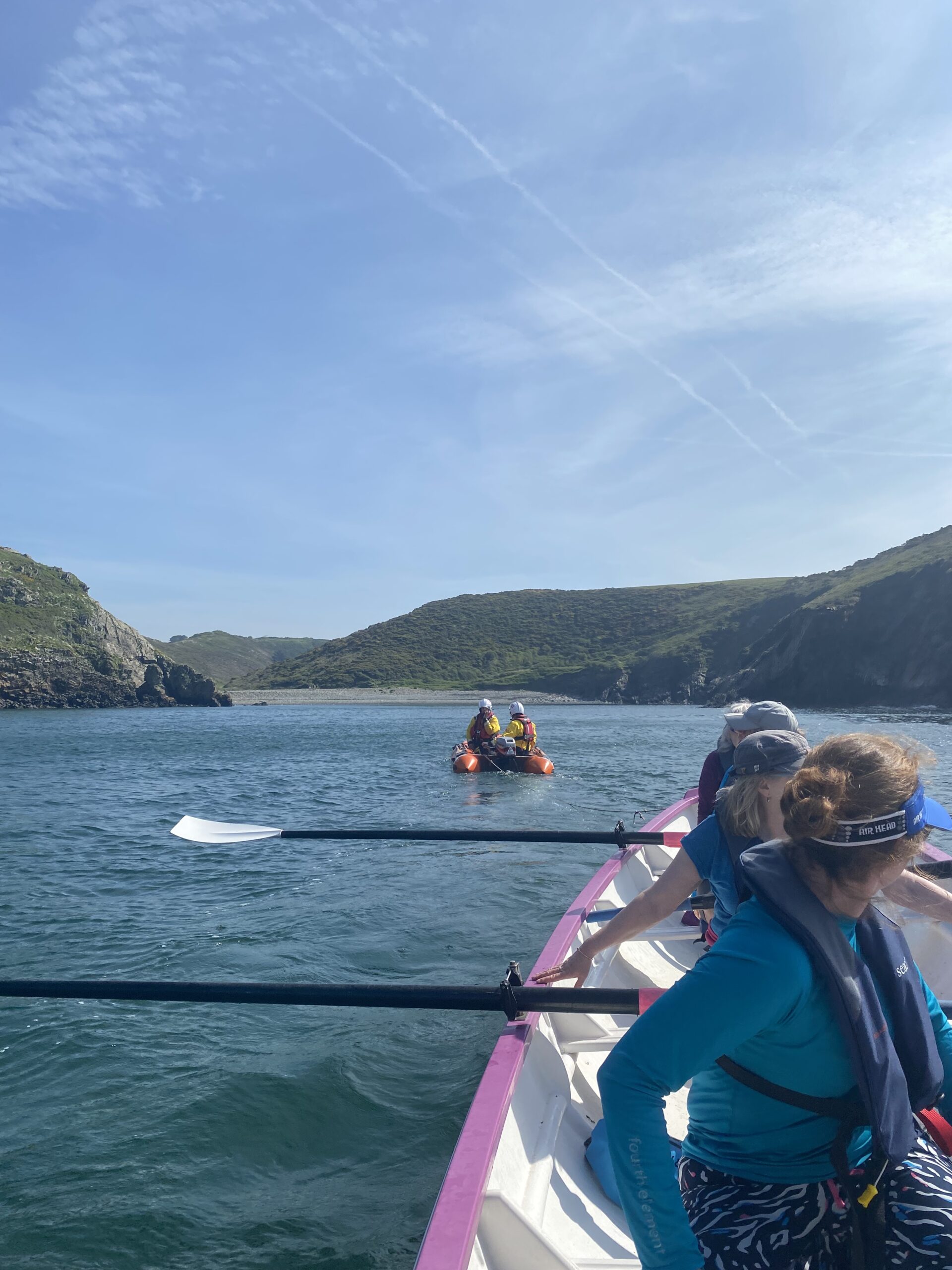
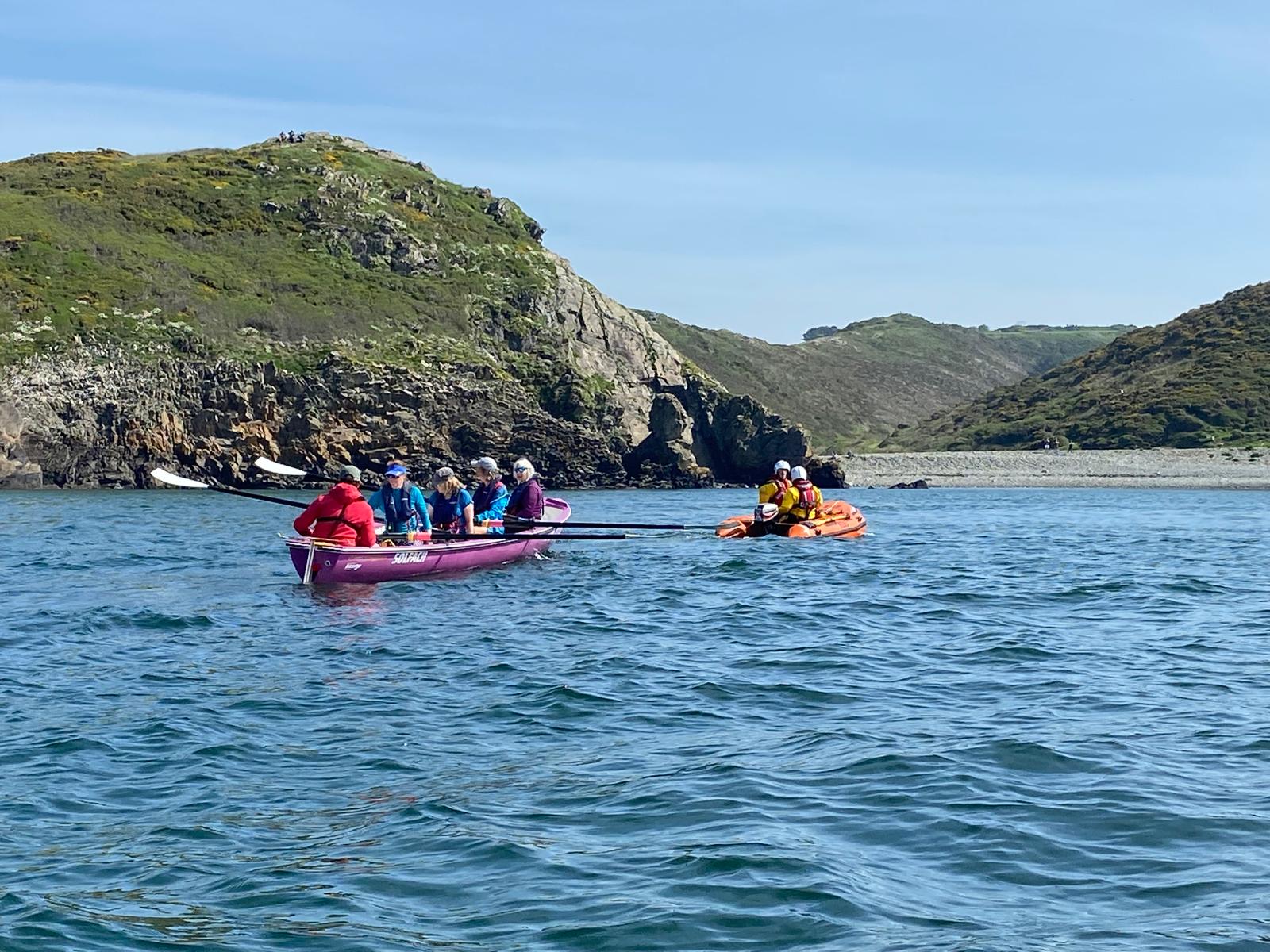
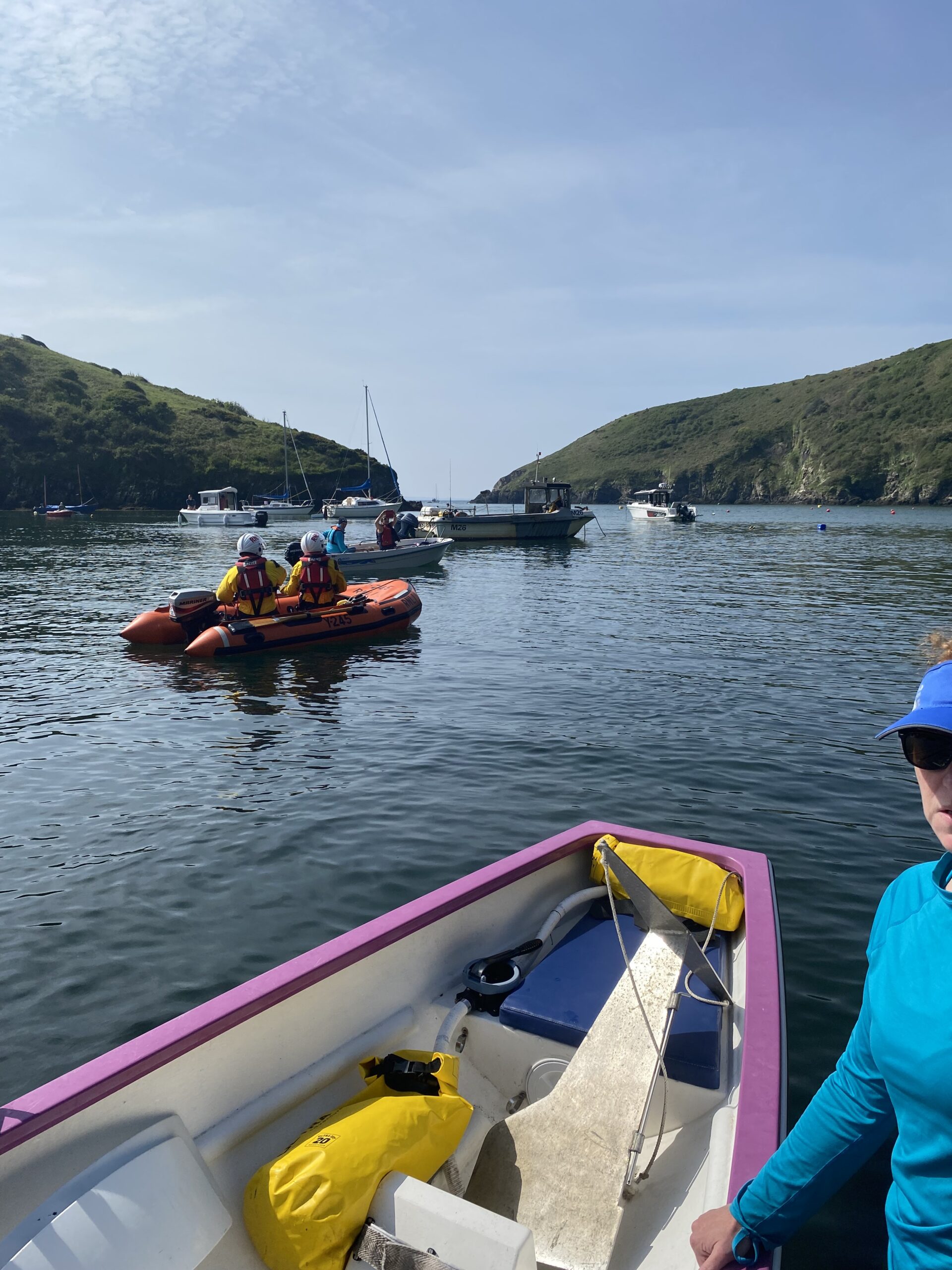
The CLB was then towed, with its crew on board, within Solva Harbour by the RNLI Y-Boat: this is the daughter boat from the ALB, which is smaller than a D-Class lifeboat, and carries a 15hp outboard and two crew. The Y-Boat towed the CLB in an astern tow, which was found to work well, and then transitioned to an alongside tow, and took the CLB from a position at Blackrock, back to the slipway. This also worked well, but see further notes below on steering.
Notes for future:
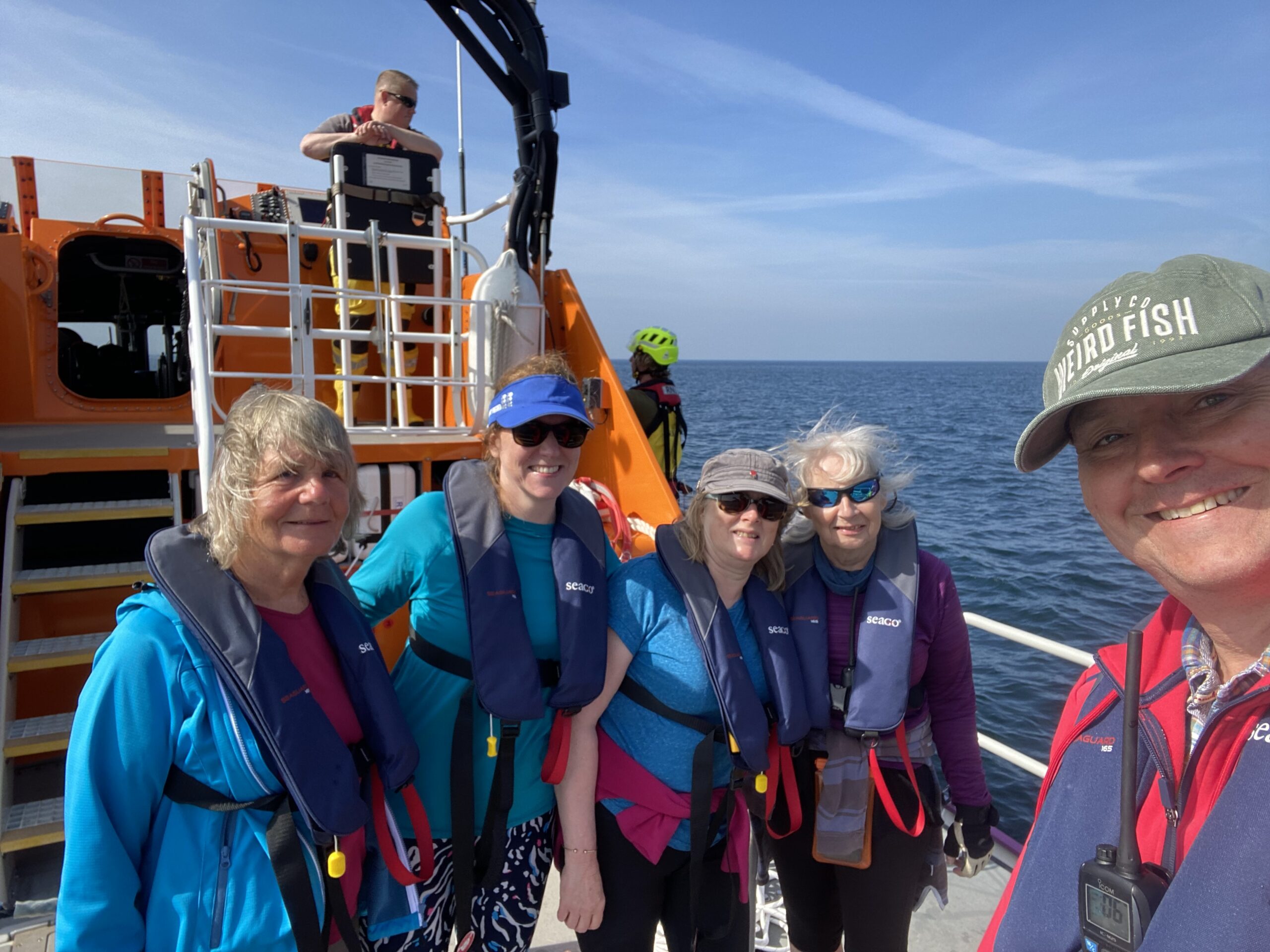
Lifejackets need to be tried on and fit adjusted prior to going out, even if they are not worn in the boat. This is because if there is a medical emergency, lifejackets would need to be donned at speed and need to fit well, no time for fiddling with fit while getting flustered. It is worth considering wearing them as routine, as even when fitted pre departure, they can be difficult to get on in a hurry.
VHF radios need to be carried out of bag, switched on, set-up (Squelch and Volume checked) and either on Ch16 or dual watch (Ch16 and Ch72) so can communicate with CG/incoming lifeboat if required, and also monitor general radio traffic, including from other CLB (e.g. on a Tuesday evening). It may be useful to undertake regular familiarization training with people re: basic use of VHF radio.
Painter length – needs to be minimum length of boat bow to stern to allow effective use for astern and alongside tow. An additional line, of the same length, could be carried in case towing is done by a non-RNLI vessel without suitable lines. This could be discussed by the committee.
Discussion to be had re: stabilisation of CLB if towed astern by a larger vessel such as the ALB (not trialled today but discussed). Likely that a sea anchor or rope arrangement would be needed to stop boat swaying side to side. RNLI pointed out that a bucket would not be appropriate as would break under strain. This may also be applicable for allowing the CLB to maintain position at sea if dealing with a casualty requiring CPR as likely all rowers will be cycling through giving CPR /doing comms and so not rowing, unless desperately required to maintain safe position. In this case, sea anchor/rope arrangement would need to be at bow.
Optimal place for CPR on CLB likely to be between cox and stroke seat, with blocks taken out and gap padded with seats etc. CPR on rafted oars was discussed, however this would put the caregivers at increased risk as high above gunwhales and boat destabilized further. Acknowledged that it would be very difficult to drag an unconscious casualty from the bow to the stern.
When being approached by a vessel giving assistance (either RNLI or non-RNLI), oars should be un- shipped from the gates and brought inboard out of the way. It’s better to be proactive about doing this, rather than wait for instruction, especially if assistance is from a non-RNLI vessel. In a medical emergency it is likely that oars will be shipped anyway as crew will be dealing with casualty (see point re: sea anchor/rope arrangement at bow).
There is no need to row while being towed as this is likely to result in catching a crab.
Cox/Crew should be aware that there are no formal fixing points on the CLB, and that if undertaking an alongside tow, or rafting alongside an assisting vessel, the CLB painter can be used as the bowline, and the seats should be used as the remaining attachment points for sternline, springs, etc.
If the CLB is being moved with an alongside tow, using a small boat (e.g. the RNLI Y-Boat), steerage needs to come from the CLB via instruction from the towing vessel. The towing vessel can just provide propulsion and command.
Alice Wilson
On behalf of Solva Rowing Club 14/05/24

RNLI Exercise
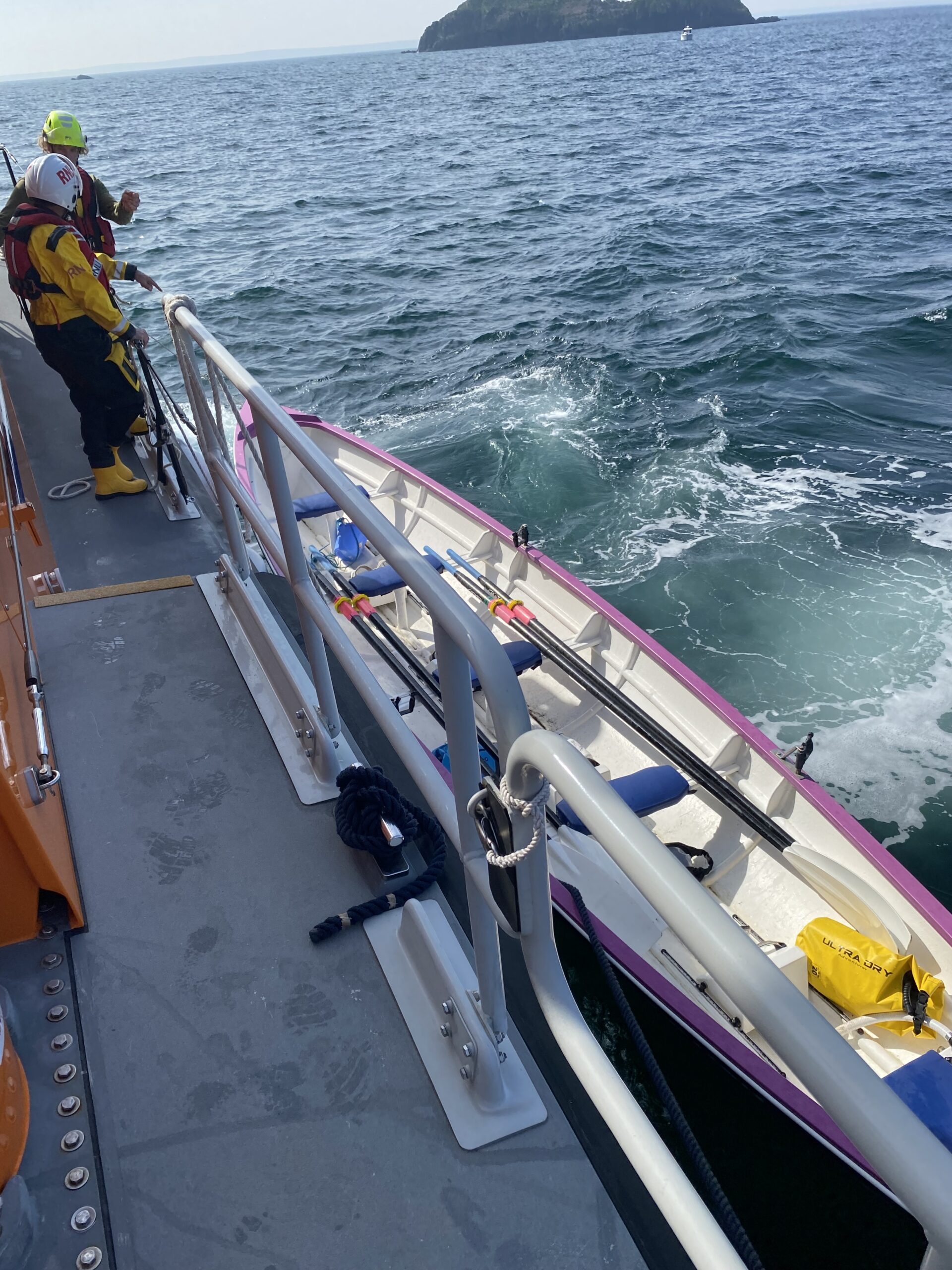


Video showing how much the Longboat was bouncing on the water, not until the Lifeboat got into the lea of the wind did it calm down!
Dead Fred is gingerly placed into the Longboat!
Dead Fred experiences the block and tackle hoist to safety!
Then it was time for a real human casualty to get the block and tackle treatment!
Getting ready for a tow!
Getting ready for alongside tow. Setting up Bow and Stern springs.